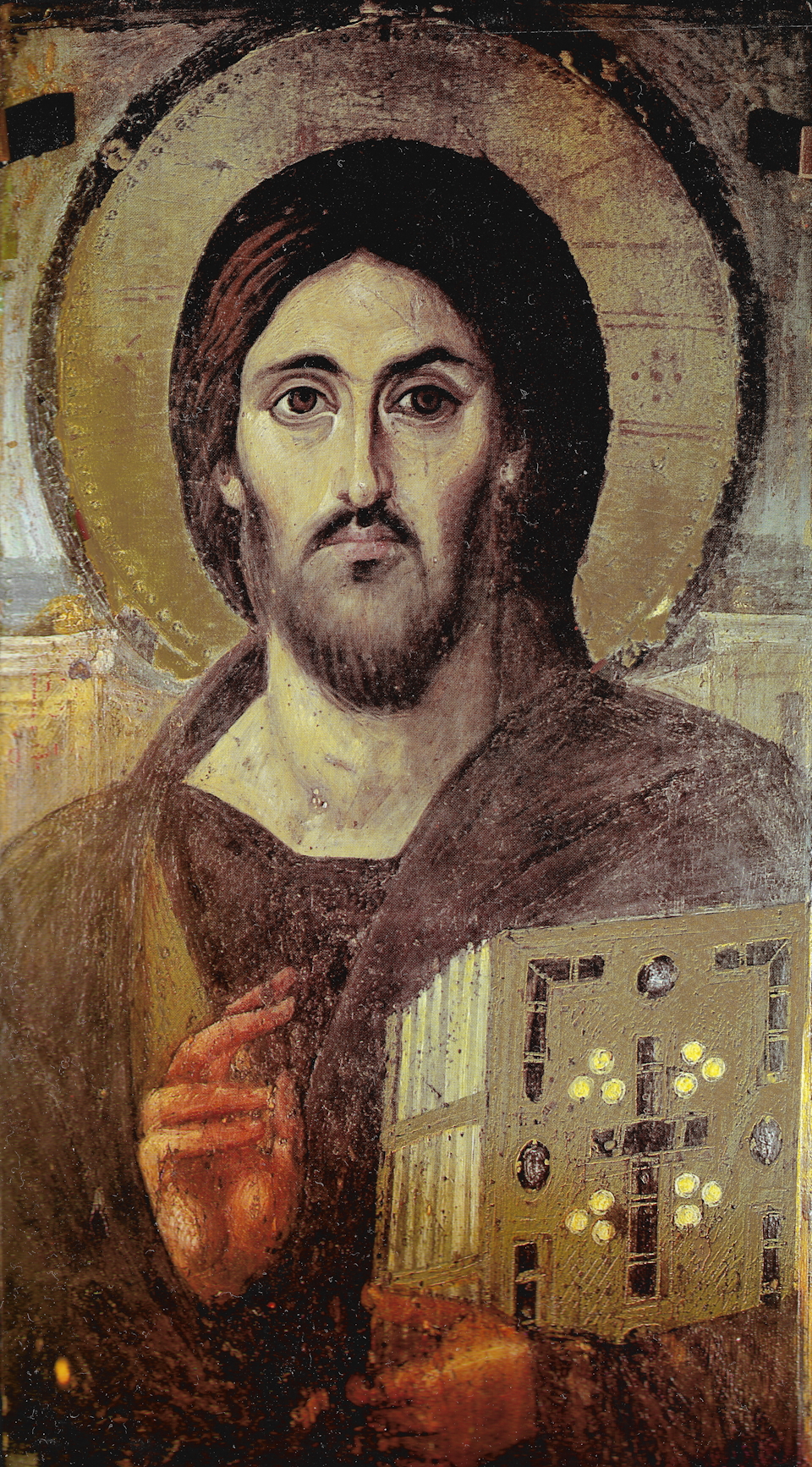
Who is Jesus Christ?
Theologians have spent many lifetimes answering this question. I can only offer a simple reflection here, prompted by the way my mind wandered back to childhood and to the Jesus I thought I knew then.
As a child, I would probably have called Him a “miracle-working prophet”. I doubt I would have put it quite like that at the time, but it describes fairly well what I believed. Jesus was someone God sent who could do extraordinary things. He gave sight to the blind, fed a crowd with a few loaves and fishes, and calmed a storm. Those were the stories that caught my attention. And why wouldn’t they? There is something wonderful about hearing, as a child, that even the wind and the sea obeyed Him.
In my heart, I know I haven’t lost that childhood wonder. But looking back, I can see that I was more taken with what Jesus could do than with who He was. And the disciples themselves ask just that question after the storm: who is this, that even the wind and the sea obey Him? (Mark 4:41). It’s a question worth sitting with, especially if we’ve heard the story so often that we know how it ends before the boat has even left the shore.
I still find myself returning to that question. Who is this Jesus whose name I speak when I pray? The answer the Church gives is both simple and astonishing: He is true God and true man. The man who was tired enough to fall asleep in the boat is the eternal Son of God. And it’s that same Jesus who knows what it is to be tired and has the power to still the storm, to whom we turn when we pray.
The Gospels bring us face to face with someone who grows tired, feels hunger, weeps at a friend’s grave, and suffers rejection. Yet this same Jesus forgives sins, commands the storm and accepts Thomas’s confession of faith in Him as Lord and God (John 20:28). We must hold all of this together to recognise who stands before us.
The Catechism of the Catholic Church teaches that Jesus is “inseparably true God and true man” (CCC 469). He is one divine Person, the eternal Son, with two natures: divine and human. In becoming human, He remained fully God and took to Himself a complete human nature (CCC 464–469). This is the mystery of the Incarnation: God the Son became flesh.
I have a fondness for the Athanasian Creed, which expresses this with a particular beauty: “Perfect God, and perfect Man.” Here, perfect means “complete”. Jesus possesses a truly human body and soul. His hunger, grief and suffering are real. He entered fully into our human condition, sharing our life in everything except sin.
The Creed then draws these truths together: “not two, but one Christ.” Its measured words invite us to slow down. One Lord Jesus Christ, whose words and actions reveal both His complete humanity and His divinity. The one who reaches out with a human hand is the eternal Son of God.
Consider what that means. The child Mary held in her arms is the Son through whom all things were made. The hands that worked with tools would reach out to heal the sick. The Jesus who wept at Lazarus’s tomb is the same Lord who called him back to life. The one who suffered on the Cross freely gave Himself for our salvation.
God has come among us. Our human life matters deeply to Him.
That gives us courage to pray honestly. When we are exhausted, grieving or struggling to face another difficult day, we can turn to Jesus. Hebrews (4:14–16) reminds us that He understands our weakness and was tempted as we are, yet without sin. We can bring Him what we find hardest to admit: our fear, resentment, loneliness and need for forgiveness.
Because He is truly God, we can entrust ourselves to His saving power. The Catechism explains that the Son became human to reconcile us with God, reveal God’s love, show us holiness and enable us to share in His divine life (CCC 457–460)). He calls us into a relationship that can transform the way we live.
This also changes how we see others. The dignity of human life should move us to patience with someone who struggles, tenderness towards the sick and practical care for those who are overlooked. Following Jesus involves allowing His love to shape our own.
So I ask you, spend time with one Gospel passage each week. Notice whom Jesus approaches, what He says and how people respond.
Then ask: What response is He asking of me?
Perhaps there is a conversation to begin, forgiveness to seek or a return to prayer that we have delayed.


 Ordinariate of Our Lady of Walsingham
 Weekly news-sheet
 YouTube
 Facebook
 Christ the King with St Joachim