Friday 25 September 2026
When we acknowledge our sins before God, we discover not a closed door, but the open arms of a merciful Father. That is why the Sacrament of Reconciliation is such a gift. God’s mercy gives us the grace to start again.

A community in Christ seeking and sharing transforming grace, reconciling love and compassionate hope
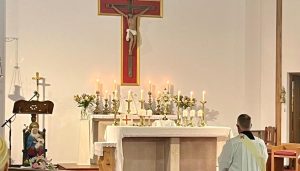
When we acknowledge our sins before God, we discover not a closed door, but the open arms of a merciful Father. That is why the Sacrament of Reconciliation is such a gift. God’s mercy gives us the grace to start again.
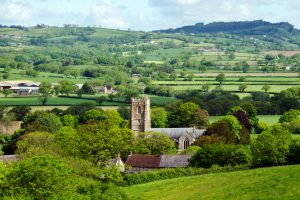
England’s ancient title as Mary’s Dowry reminds us of a Christian heritage entrusted to Our Lady, who always leads us towards her Son, Jesus Christ. Today, that heritage is not simply something to remember, but a call to renewal, to rebuild our families, communities and nation upon Christ and once again bear good fruit.

Jesus established a profound principle at the heart of Catholic Social Teaching: religious tradition and social structures exist to serve human life, not to constrain compassion. St. Teresa lived this principle with radical clarity.
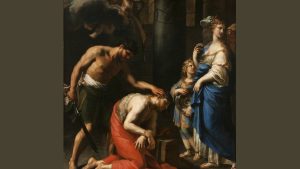
John’s death asks each of us a simple question: When the teaching of Christ becomes difficult, are we prepared to remain faithful?
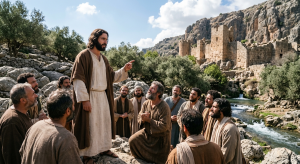
We live among competing claims — about power, success, identity, truth and what gives life meaning. The question Jesus asks has not changed: “Who do you say that I am?” It is not merely a question requiring a theological answer. It is an invitation to consider our own relationship with Christ.

St Joseph was a man who loved without seeking attention. His love for Mary was faithful and selfless, and he loved Jesus with the tenderness of a father. It’s therefore not surprising that this love protected the Holy Family in times of uncertainty, danger, and hardship. We look to St Joseph not because of his […]
 Today
Today

Tomorrow is the Nineteenth Sunday after Trinity, and Mass will be celebrated according to Divine Worship at 11:30am at Christ the King Church Langney. We’d love to see you! The pew sheet is available at the link below. We’re reverting to the setting by John Merbecke this weekend, the music for which is in the printed Mass booklets.
We’re looking forward to welcoming Ordinariate members and friends to the 2026 Ordinariate Festival which is being held in Eastbourne from Tuesday. Come and hear Prof David Clayton talk on 𝗕𝗲𝗮𝘂𝘁𝘆, 𝗧𝗿𝘂𝘁𝗵 𝗮𝗻𝗱 𝗚𝗼𝗼𝗱𝗻𝗲𝘀𝘀, and worship with us at Mass and the daily Offices. Details are at eastbourneordinariate.org.uk/ordinariate-festival-2026 — although we’re fully booked for meals, there are lots of eateries in town or in the Harbour for lunch on Wednesday. Let’s pray for an enjoyable couple of days of learning, worshipping and talking with friends old and new.
eastbourneordinariate.org.uk/social_link.php?id=222

Nineteenth Sunday after Trinity
eastbourneordinariate.org.uk
Pew sheet for the Nineteenth Sunday after Trinity, 11 October 20260 CommentsComment on Facebook
Daily Office Online – Mattins, Evensong & Compline for the Ordinariate
Daily Office Online – Mattins, Evensong & Compline for the Ordinariate
dailyoffice.online
Mattins, Evensong and Compline according to Divine Worship: Daily Office (Commonwealth Edition), with the full texts, for the Ordinariate.0 CommentsComment on Facebook
 Ordinariate of Our Lady of Walsingham
 Weekly news-sheet
 YouTube
 Facebook
 Christ the King with St Joachim
