Saturday 12 September is the feast of The Most Holy Name of Mary
In Luke’s Gospel, Jesus gives us a simple but searching way of looking at our lives: when he said, “For no good tree bears bad fruit, nor again does a bad tree bear good fruit, for each tree is known by its own fruit… of the abundance of the heart his mouth speaks.” (Luke 6:43-45)
This is a powerful image. A tree is known by its fruit. What grows in the heart eventually becomes visible in how we live.
This describes how a person’s private thoughts, motives, and beliefs inevitably reveal themselves through their outward actions and behaviour. Just as an apple tree can’t produce oranges, a person’s true nature can’t be permanently hidden; what lives in the heart will always find expression in how they treat others and live their daily life.
Today, as we celebrate the Most Holy Name of Mary, it’s worth asking what this means not only for us as individuals, but also for the land in which we live, called Mary’s Dowry: a symbol of our collective Christian inheritance and trust in her protection.
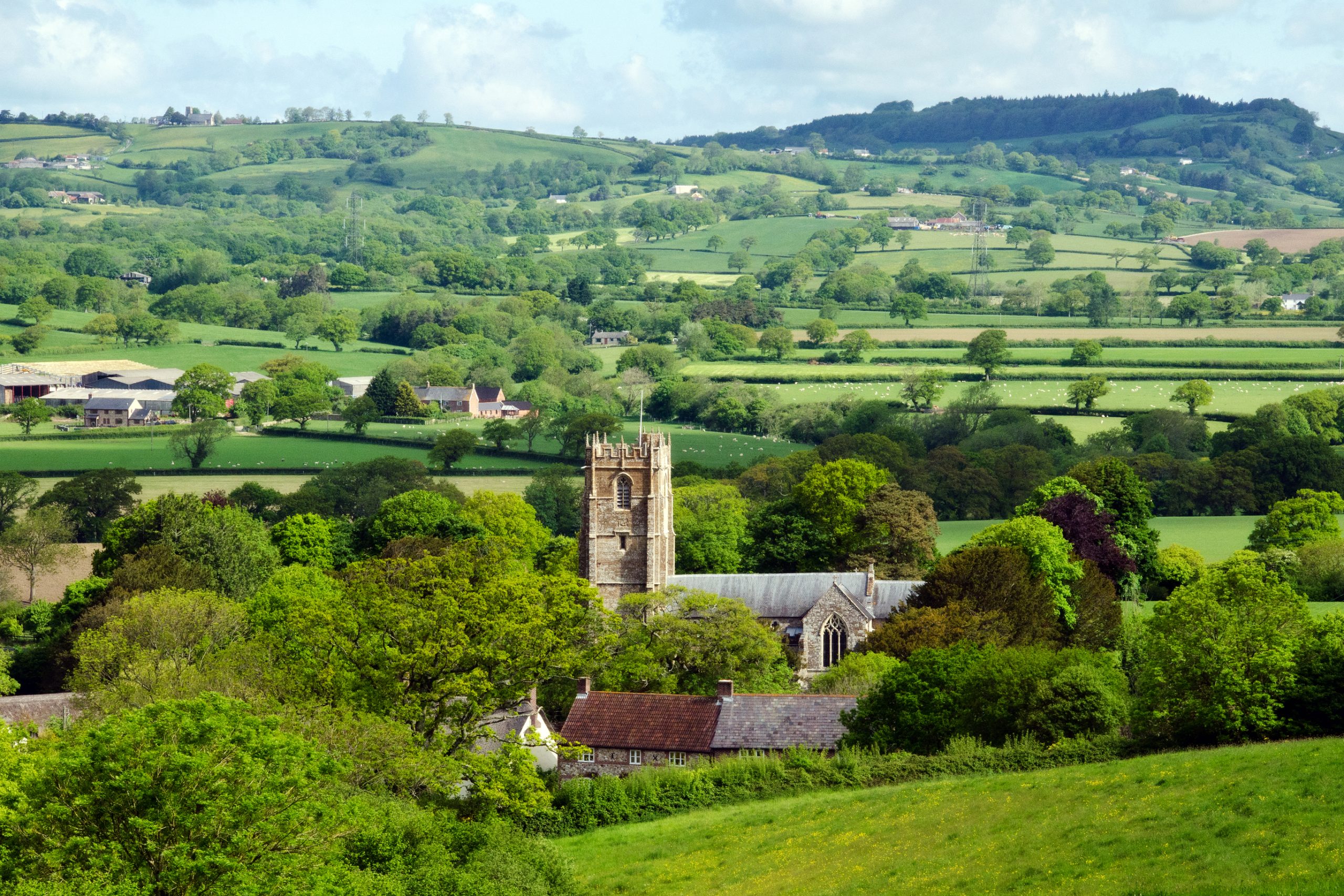 To speak of England as Mary’s Dowry is to remember that, for centuries, our people placed themselves under the protection and care of Our Lady. It was not simply a sentimental devotion to Mary. It was an acknowledgement that this land, its people and its future should be entrusted to God through the Mother of His Son.
Nowhere does that relationship come alive more than at Walsingham in Norfolk. The story of Walsingham begins in the eleventh century with Richeldis de Faverches, a devout Englishwoman who received a vision of Our Lady. Mary asked her to build a replica of the Holy House of Nazareth.
This wasn’t an insignificant task because Mary didn’t draw attention to herself. Instead, she directed Richeldis towards Nazareth, towards the place of the Annunciation, where Mary herself had first responded to God: “Behold, I am the servant of the Lord; let it be to me according to your word.” (Luke 1:38)
Pointing beyond herself toward Jesus has always been Mary’s role. At Cana, she tells the servants, “Do whatever he tells you.” (John 2:5). At the foot of the Cross, she remains faithful when almost everything appears lost. And at the beginning of the Church’s story, she is found praying with the disciples, waiting for the coming of the Holy Spirit (Acts 1:14).
Mary never keeps us for herself. She takes us by the hand and leads us towards her Son. That’s why Walsingham matters. It is not simply a place where we go to remember England’s Christian past. It reminds us where that past began, with the Word becoming flesh in the womb of Mary and God entering the history of His people.
It reminds us of God’s astonishing humility: the Creator entered His creation and chose to come among us through the free and trusting obedience of a young woman.
To call England Mary’s Dowry is therefore much more than looking backwards with nostalgia; it challenges us to reflect on the fruit we are bearing-whether in our actions, our communities, or our faith in daily life.
We can preserve the appearance of Christianity while losing the living faith at its heart. We can admire our churches without entering them. We can celebrate our heritage without believing the Gospel. We can speak fondly about Christian England while failing to pass the faith on to our children.
And the fruit of Christian faith is not simply found in buildings or traditions. It’s seen in lives changed by Christ: in families who pray together, in people who forgive, in the welcome given to the stranger, in the care of the poor and vulnerable, in young people discovering that faith is not an old story but a living relationship with Jesus Christ.
Her faith wasn’t based on having all the answers but on trusting God through every uncertainty, inspiring us to do the same.
That is the faith we are being called to recover. If we want our families and communities to flourish, we can’t build simply on nostalgia, politics, prosperity or self-reliance. We need to build again upon Christ.
And that renewal begins with the ordinary making an extraordinary decision: to turn towards God. Perhaps that is one reason the image of a pilgrimage is so appropriate. England’s Christian story is not finished. We are still walking.
To call England Mary’s Dowry is not to claim that the Christian faith belongs safely in the past. It invites us to begin again. Mary’s greatness was never that she sought attention for herself. Her greatness was that she allowed God to work through her. Her fiat, “Let it be to me according to your word,” opened the door through which Christ entered our world.
Perhaps England needs to rediscover something of that same openness. Not simply to recover what has been lost, but to ask God what He wants to do now. The ancient title Mary’s Dowry can therefore become more than a memory. It can become a prayer.
The hope is that this land once again becomes a place where faith can take root, where families can discover hope, where young people encounter Christ, and where those who are struggling find the love and dignity that belong to every human person.
And so, as we honour the Most Holy Name of Mary, let us pray that England’s Christian roots may once again produce good fruit through our renewed faith and active living of Christ’s love.
England is Mary’s Dowry, not so that Mary might keep it for herself, but so that she might lead it, as she has always done, towards her Son.

Our Lady of Walsingham, pray for us!


 Ordinariate of Our Lady of Walsingham
 Weekly news-sheet
 YouTube
 Facebook
 Christ the King with St Joachim